The Fundamentals of Electric Milk Frother Technology and Market Positioning
The modern Electric Milk Frother represents a critical intersection between fluid dynamics and kitchen engineering. At its core, the device is designed to introduce controlled aeration into liquid dairy or plant-based alternatives, creating a stable foam structure known as micro-foam. Unlike manual frothing methods, a professional-grade Electric Milk Frother utilizes high-precision components to ensure consistency in bubble size and foam density, which are essential metrics for both commercial cafe settings and high-end residential applications.
From a technical perspective, the primary function of an Electric Milk Frother is the mechanical denaturation of milk proteins. When the whisk or induction system operates, it incorporates air into the liquid while simultaneously applying specific kinetic energy. In heated models, this process is synchronized with thermal regulation to prevent the scorching of lactose, ensuring the final texture is silky rather than dry or stiff.
The Evolution of Electric Milk Frother: From Handheld Whisks to Magnetic Induction
The trajectory of Electric Milk Frother development reflects a broader shift toward automation and precision in the beverage industry. Early iterations focused on simple battery-operated DC motors driving a stainless steel coil whisk. While effective for basic aeration, these lacked the torque stability required for heavy creams or large volumes.
The contemporary Electric Milk Frother market has bifurcated into specialized categories:
High-RPM Handheld Devices: Optimized for speed and portability, utilizing ergonomic grips and reinforced drive shafts.
Magnetic Induction Carafes: These represent the pinnacle of current Electric Milk Frother technology, using electromagnetic fields to drive the whisk and heat the vessel simultaneously, eliminating the need for mechanical couplings that are prone to wear and leakage.
Global Market Demand for High-Precision Frothing Solutions in B2B Environments
In the B2B international trade sector, the Electric Milk Frother is no longer viewed as a mere accessory but as a vital component of the coffee-at-home and professional hospitality supply chain. Manufacturing enterprises have responded to this by upgrading production lines to meet global certification standards. The demand is driven by the rise of specialty coffee culture, where the stability of the foam produced by an Electric Milk Frother is scrutinized under the same standards as commercial steam wands.
Analyzing the Impact of Milk Protein Denaturation on Foam Stability
The efficiency of an Electric Milk Frother is scientifically measured by its ability to manipulate whey proteins and casein. When the temperature reaches approximately 60-65 degrees Celsius, the proteins form a protective layer around the air bubbles. A high-quality Electric Milk Frother must maintain this temperature range precisely; exceeding it leads to protein breakdown and foam collapse.
Below is a technical comparison of the performance parameters between different types of Electric Milk Frother systems:
| Technical Parameter |
Handheld Electric Milk Frother |
Induction Electric Milk Frother |
Steam-Integrated Systems |
| Motor Type |
High-Speed DC Motor |
Brushless Magnetic Drive |
Pressure-Pump System |
| Rotational Speed (RPM) |
12,000 - 19,000 |
2,500 - 5,000 (High Torque) |
N/A (Air Injection) |
| Heating Method |
None / External |
Electromagnetic Induction |
Boiler / Thermoblock |
| Foam Consistency |
High Aeration / Macro-foam |
High Density / Micro-foam |
Professional Grade |
| Primary Material |
ABS Plastic / Stainless Steel |
Borosilicate Glass / SUS304 |
Heavy-Duty Metal Alloy |
| Power Source |
AA Batteries / Li-ion |
AC 110V-240V |
AC High Wattage |
Engineering Excellence: Core Components and Technical Specifications
The structural integrity and performance efficiency of an Electric Milk Frother are dictated by the quality of its internal architecture. For industrial-scale production and B2B procurement, understanding these components is essential to evaluating the product's value proposition and long-term reliability. A professional Electric Milk Frother is more than a simple motorized whisk; it is a calibrated instrument designed to withstand thermal stress and mechanical friction.
High-Torque Motors: The Heart of the Handheld Electric Milk Frother
In handheld configurations, the motor is the most critical failure point and the primary driver of performance. A premium Electric Milk Frother typically employs a high-torque DC motor. Unlike standard toy motors, these are engineered with carbon brushes and copper windings that allow for sustained RPM (Revolutions Per Minute) under the resistance of high-viscosity liquids, such as heavy cream or cold whole milk.
The stabilization of the drive shaft is another hallmark of engineering excellence. In a well-manufactured Electric Milk Frother, the shaft is constructed from hardened stainless steel to prevent wobbling or eccentricity at high speeds. This precision ensures that the aeration remains uniform, preventing the creation of large, unstable bubbles that dissipate quickly.
Magnetic Induction Heating: Precision Temperature Control in Desktop Models
For stationary or carafe-style devices, the Electric Milk Frother utilizes magnetic induction technology. This method is far superior to traditional resistive heating elements. By using an oscillating magnetic field to induce eddy currents within the whisk or the base of the pitcher, the Electric Milk Frother achieves near-instantaneous heat transfer.
The primary advantage here is thermal precision. Integrated NTC (Negative Temperature Coefficient) thermistors allow the Electric Milk Frother to monitor the liquid temperature in real-time. This prevents the scalded milk taste by automatically deactivating the heating element once the milk reaches the ideal sweet spot of 65 degrees Celsius.
Material Integrity: 304 vs. 316 Stainless Steel for Food-Grade Safety
Material selection is where the industrial Electric Milk Frother separates itself from low-grade consumer versions. The whisk and the internal reservoir must be constructed from food-grade alloys.
Grade 304 Stainless Steel: The industry standard for an Electric Milk Frother, offering excellent corrosion resistance and durability.
Grade 316 Stainless Steel: Often reserved for high-end or medical-grade applications, this alloy contains molybdenum, providing superior resistance to chlorides and organic acids, making the Electric Milk Frother exceptionally easy to sanitize in commercial environments.
The housing often utilizes BPA-free ABS polymer or brushed aluminum, providing a heat-resistant barrier that remains cool to the touch during operation.
Ergonomic Design and Durability Standards for High-Frequency Commercial Use
Durability in an Electric Milk Frother is also measured by its switch mechanism and battery/power management. High-frequency tactile switches are tested for up to 50,000 cycles to ensure they do not fail under the rigors of a busy food-service environment. For cordless models, the integration of lithium-ion technology has replaced older Ni-MH cells, providing consistent power output even as the charge diminishes, ensuring the Electric Milk Frother maintains peak RPM throughout the day.
| Component |
Standard Specification |
Premium/Industrial Specification |
| Motor Drive |
Standard DC Brushed |
High-Torque / Brushless DC (BLDC) |
| Whisk Material |
SUS 201 / Plated Steel |
SUS 304 / SUS 316 Food-Grade |
| Shaft Tolerance |
< 0.5 mm deviation |
< 0.05 mm (Precision Ground) |
| Temperature Sensor |
Bimetallic Strip |
Digital NTC Thermistor / PID Control |
| Housing Material |
Standard Polypropylene |
Reinforced ABS / Double-Wall Stainless Steel |
| Noise Level |
65 - 75 dB |
< 50 dB (Silent Drive Technology) |
| Switch Durability |
10,000 Cycles |
50,000+ Cycles (Heavy Duty) |
Specialized Categories and Functional Diversity
In the industrial landscape of coffee equipment, the Electric Milk Frother is categorized based on its power source, mechanical architecture, and intended volume. Manufacturers optimize these devices to balance speed, foam quality, and energy efficiency. Understanding the functional diversity of the Electric Milk Frother allows procurement specialists to select the precise tool for their specific operational scale.
Handheld Battery-Operated Electric Milk Frother: Portability and Instant Performance
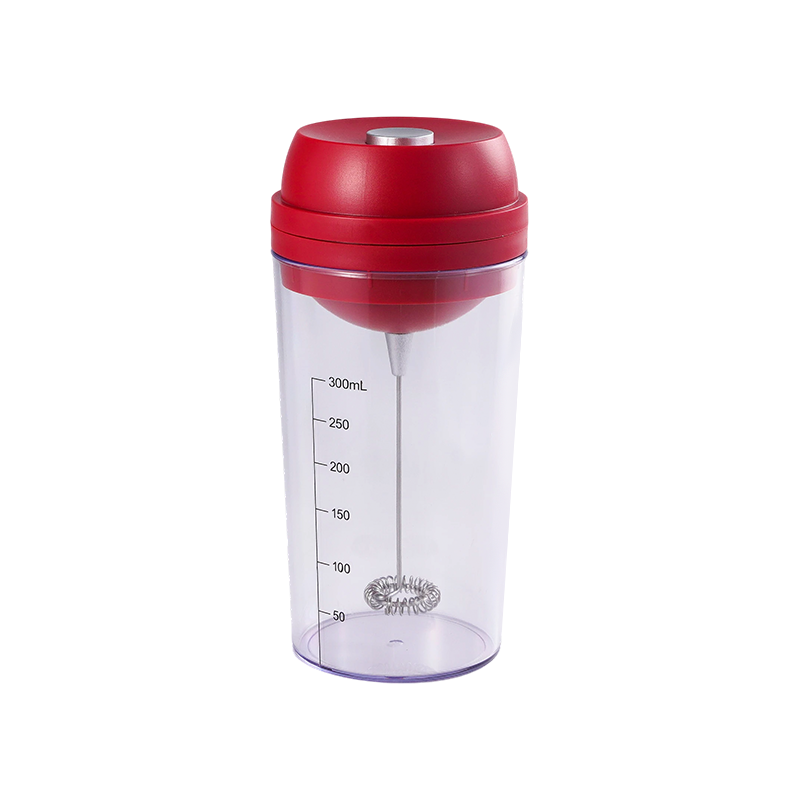
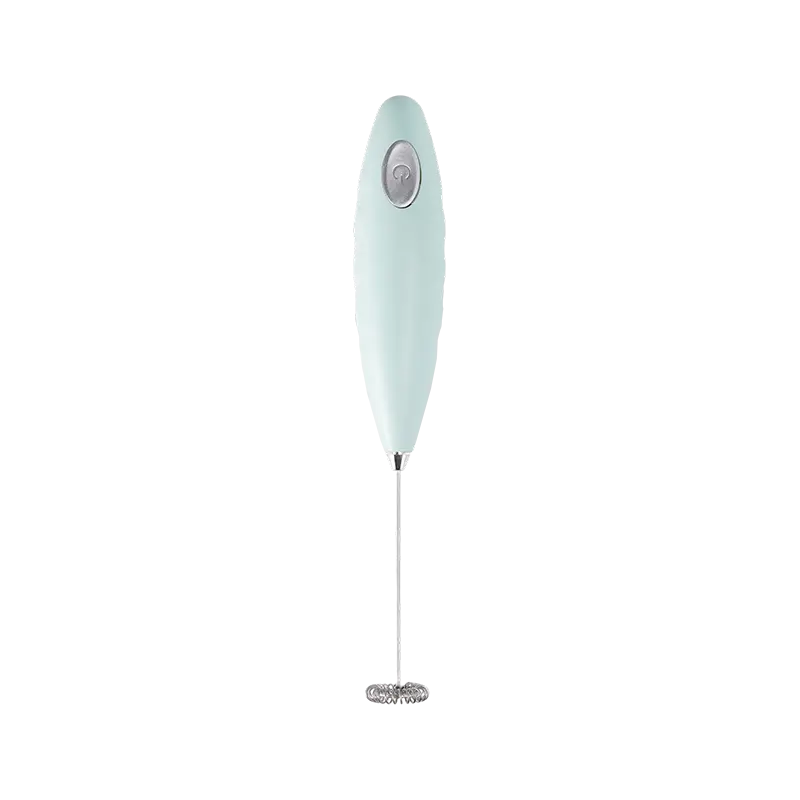
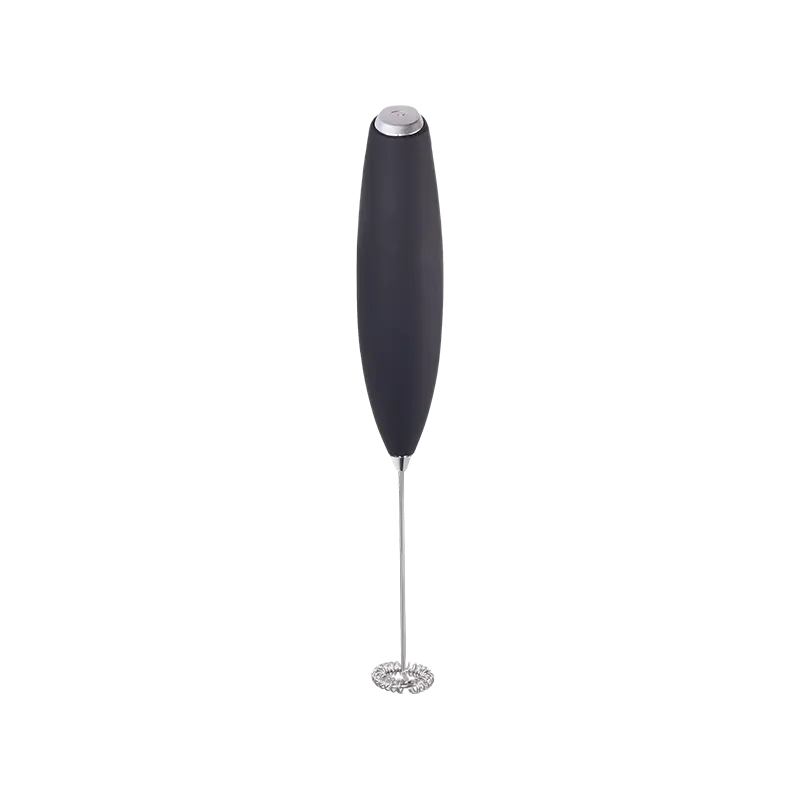
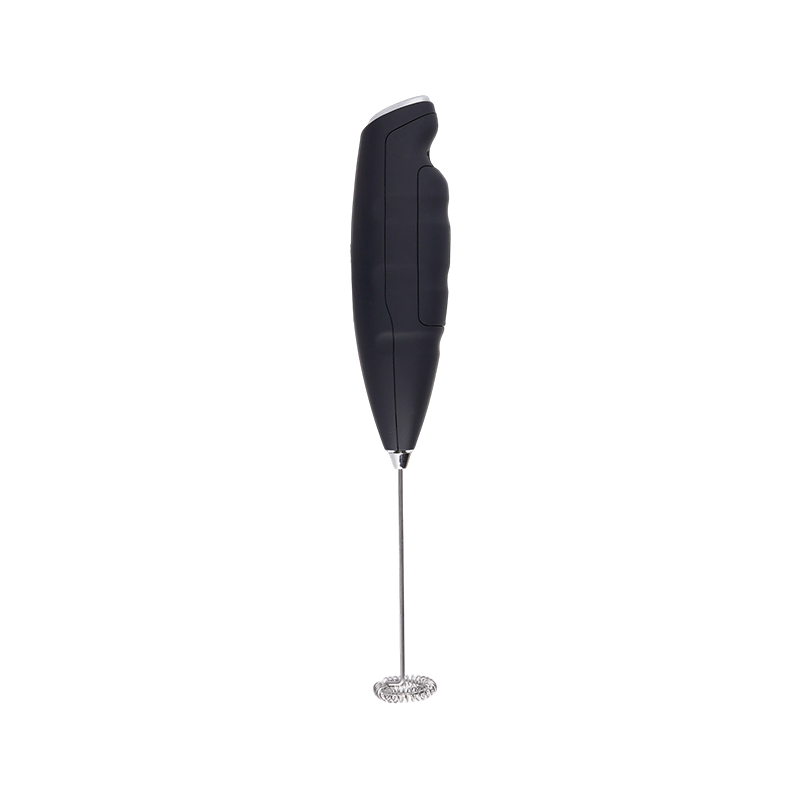
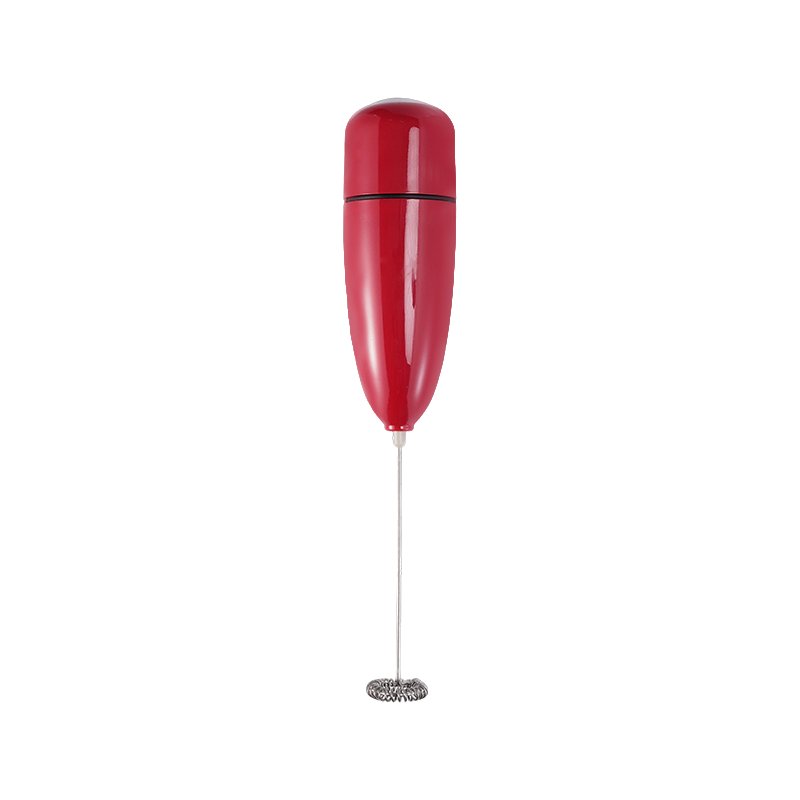
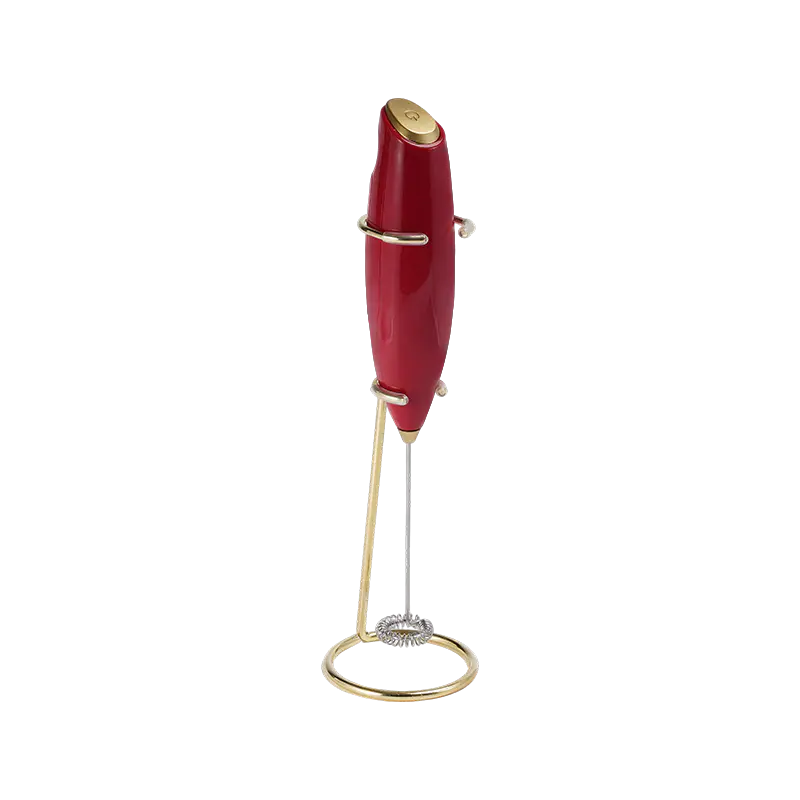
The handheld Electric Milk Frother remains the most ubiquitous variant due to its simplicity and immediate utility. Engineered with a slim, ergonomic handle housing a high-speed DC motor, this version of the Electric Milk Frother is designed for rapid agitation. The whisk, typically a double-layer spring coil made of SUS304 stainless steel, creates a powerful vortex that pulls air into the milk.
While traditionally powered by alkaline batteries, the modern handheld Electric Milk Frother is increasingly adopting high-discharge cells to maintain torque. These units are highly valued in settings where space is at a premium and a cordless solution is required for quick, single-serve beverage preparation.
Automatic Induction Electric Milk Frother: Achieving Micro-Foam with One-Touch Operation
The automatic Electric Milk Frother represents a significant leap in functional complexity. Unlike handheld wands, these units are self-contained carafes. The integration of induction heating coils in the base allows this Electric Milk Frother to heat and froth simultaneously. The whisk is often magnetically coupled, meaning there are no physical shafts penetrating the carafe, which eliminates the risk of leaks and simplifies the cleaning process.
The functional diversity here includes multiple modes of operation:
Warm Thick Foam: Optimized for traditional cappuccinos.
Warm Thin Foam: Calibrated for latte art and flat whites.
Cold Frothing: Designed for iced coffee applications without applying heat.
Milk Warming: Utilizing a separate heating-only attachment.
Professional Steam-Integrated Systems: The Intersection of Heat and Aeration
Though technically distinct from whisk-based devices, the steam-integrated Electric Milk Frother uses pressurized vapor to texture milk. In this system, the Electric Milk Frother utilizes a thermoblock or boiler to generate steam, which is then forced through a nozzle. This process not only aerates the milk but also sweetens it by breaking down complex lactose into simpler sugars through controlled thermal exposure.
Rechargeable Lithium-Ion vs. Traditional Battery Configurations
A critical technical evolution in the Electric Milk Frother sector is the shift toward lithium-ion (Li-ion) technology. Standard AA batteries often suffer from a voltage drop as they deplete, leading to a noticeable decline in the RPM of the Electric Milk Frother. In contrast, a Li-ion powered Electric Milk Frother utilizes a constant-current PCB that ensures peak rotational speed until the battery is nearly exhausted.
| Feature |
Handheld (Alkaline) |
Handheld (Rechargeable) |
Automatic Induction |
| Peak RPM |
11,000 - 13,000 |
15,000 - 19,000 |
2,500 - 4,500 (High Torque) |
| Charging Standard |
N/A (Disposable) |
USB-C / Micro-USB |
AC Power Cord (Direct) |
| Battery Capacity |
N/A |
1200mAh - 2000mAh |
Mains Power Only |
| Heating Range |
None |
None |
60°C - 75°C (Programmable) |
| Operation Time |
Manual (Single Speed) |
Multi-Speed (3 Modes) |
Automatic (Timed Cycles) |
| Capacity (Milk) |
Unlimited (Per Cup) |
Unlimited (Per Cup) |
250ml - 600ml (Fixed) |
| Safety Features |
Basic Switch |
Overcharge Protection |
Auto-Off / Dry-Burn Protection |
Critical Manufacturing Processes and Supply Chain Advantages
The transition from a conceptual design to a market-ready Electric Milk Frother involves a series of sophisticated manufacturing stages. In the competitive B2B landscape, the efficiency of these processes directly impacts the unit cost, structural durability, and the reliability of the electronic components.
Precision Injection Molding for Heat-Resistant Polymer Housings
The exterior casing of an Electric Milk Frother is typically produced using advanced plastic injection molding. For devices that incorporate heating elements, the material must be a high-grade, heat-resistant polymer such as ABS (Acrylonitrile Butadiene Styrene) or Polypropylene (PP) with food-safe certifications.
The molding process for a professional Electric Milk Frother requires:
Tight Tolerance Tooling: To ensure a seamless fit between the motor housing and the battery compartment, preventing moisture ingress.
Surface Finishing: Achieving a soft-touch ergonomic grip through specialized mold textures.
Structural Reinforcement: Internal ribs are molded into the chassis to dampen motor vibrations, reducing the decibel output of the Electric Milk Frother.
Automated PCB Assembly for Intelligent Temperature and Speed Regulation
The intelligence of a modern Electric Milk Frother resides in its Printed Circuit Board Assembly (PCBA). For B2B suppliers, automation in SMT (Surface Mount Technology) lines is crucial. The PCBA in an Electric Milk Frother manages several critical functions:
Pulse Width Modulation (PWM): To control the motor speed across multiple settings.
Safety Interlocks: Implementing dry-burn protection and automatic shut-off timers.
Thermal Management: Processing data from NTC sensors to maintain the exact 65 degrees Celsius threshold.
Quality Control Protocols: Salt Spray Testing and Lifecycle Durability Assessments
To guarantee longevity, the Electric Milk Frother must undergo a battery of stress tests.
Salt Spray Testing: The stainless steel whisks and shafts are subjected to a saline mist for 24-48 hours to ensure the chromium oxide layer prevents rusting.
Lifecycle Testing: Automated rigs perform thousands of on/off cycles to simulate years of daily use.
Load Consistency: Testing the Electric Milk Frother in various liquid densities to ensure the RPM remains stable.
OEM/ODM Customization: Tailoring Electric Milk Frothers for Global Brand Requirements
A significant advantage in the Electric Milk Frother supply chain is the ability to offer OEM and ODM services. This allows global distributors to request specific modifications, such as customized RPM profiles, unique colorways, or specialized whisk geometries.
| Manufacturing Stage |
Standard Production Process |
Industrial/B2B Excellence Process |
| Housing Material |
Recycled ABS / Basic PP |
Virgin Heat-Resistant ABS / Food-Grade SUS304 |
| PCB Assembly |
Manual Soldering / Simple Logic |
Fully Automated SMT / Intelligent MCU Control |
| Motor QC |
Basic Power-On Test |
Dynamometer Testing (Torque & RPM Stability) |
| Waterproofing |
Basic Splash Resistance |
IPX4 - IPX6 Certified Sealing |
| Packaging |
Standard Corrugated Box |
ISTA-Certified Drop-Tested Export Packaging |
| Certifications |
Self-Declaration |
Third-Party CE, RoHS, FDA, ETL, FCC |
Optimization of Frothing Science: Milk Chemistry and Temperature Variables
The functional efficiency of an Electric Milk Frother is inextricably linked to the biochemical composition of the liquid being processed. Achieving the perfect micro-foam is an exercise in applied thermodynamics and surface chemistry.
The Role of Lipids and Proteins in Creating the Perfect Latte Art Foam
The physics of frothing within an Electric Milk Frother centers on two primary components: proteins (casein and whey) and lipids (fats).
Proteins as Stabilizers: When the Electric Milk Frother introduces air, the proteins denature and form a protective film around each bubble.
Lipids as Destabilizers: Milk fats can puncture the protein film of the bubbles. As the Electric Milk Frother heats the milk above the fat melting point, the foam becomes significantly more stable.
Optimal Temperature Windows for Soy, Oat, and Almond Milk Alternatives
The rise of plant-based diets has necessitated a more nuanced approach to Electric Milk Frother calibration.
Oat Milk: Requires a threshold of 55-60 degrees Celsius to preserve natural sweetness and prevent the starch from becoming overly viscous.
Almond Milk: Overheating can cause proteins to coagulate too quickly, leading to separation.
Advanced Aeration Techniques: Balancing Air Injection with Circular Flow
An industrial-grade Electric Milk Frother uses a specific vortex geometry to ensure that aeration and heating are uniform. The whisk's rotational speed must be high enough to incorporate air initially and then maintain a circular flow to break down large bubbles into micro-foam.
Maintenance and Sanitation: Hydrophobic Coatings and Easy-Clean Components
In commercial settings, the residue left by milk proteins can quickly become a biohazard. High-end Electric Milk Frother models often incorporate:
Non-Stick Internal Surfaces: Specialized ceramic coatings that prevent protein caking.
Detachable Magnetic Whisks: Allowing for 360-degree cleaning without fixed drive shafts.
| Milk Category |
Fat Content (%) |
Protein Content (%) |
Ideal Frothing Temp (°C) |
Foam Stability Index |
| Whole Dairy Milk |
3.25% - 4.0% |
3.2% - 3.5% |
60°C - 65°C |
Very High (Creamy) |
| Skim Dairy Milk |
< 0.5% |
3.4% - 3.6% |
45°C - 55°C |
Extremely High (Stiff) |
| Oat Milk (Barista) |
2.5% - 3.5% |
1.0% - 1.5% |
55°C - 60°C |
High (Silky) |
| Almond Milk |
1.0% - 2.0% |
0.5% - 1.0% |
50°C - 55°C |
Medium (Airy) |
| Soy Milk |
1.5% - 2.5% |
3.0% - 3.5% |
55°C - 60°C |
High (Dense) |
Strategic Integration for Global Distribution and B2B Procurement
The commercial viability of an Electric Milk Frother in the international market is determined by its adherence to stringent regulatory frameworks and efficient logistical integration.
Regulatory Compliance: CE, RoHS, FDA, and ETL Certification Standards
In the high-stakes environment of kitchen appliance imports, an Electric Milk Frother must have verified certifications:
Electrical Safety (CE & ETL): Must pass LVD and EMC testing for the European and North American markets.
Food Contact Materials (FDA & LFGB): Every component of the Electric Milk Frother that touches the liquid must be tested for migration.
Environmental Responsibility (RoHS): Free from hazardous substances like lead and mercury.
Packaging Engineering for Bulk Export and International Logistics
Packaging for an Electric Milk Frother is a critical protective layer.
ISTA-3A Testing: Shipments are tested for vibration simulation and atmospheric conditioning.
Space Optimization: Box dimensions are optimized to maximize the quantity of Electric Milk Frother units per 40ft HQ container.
Bulk Sourcing Strategies: Evaluating Production Capacity and Lead Times
When sourcing at scale, lead times and production elasticity are paramount. A tier-one factory typically operates with a Just-In-Time system. Lead times for a mass-produced Electric Milk Frother range from 25 to 35 days.
| Parameter |
Region: European Union |
Region: North America |
Global Standard |
| Electrical Safety |
CE (LVD/EMC) |
ETL / UL 1026 |
IEC 60335 |
| Food Safety |
LFGB / REACH |
FDA 21 CFR |
ISO 22000 |
| Eco-Compliance |
RoHS / WEEE |
Proposition 65 (CA) |
ISO 14001 |
| Shipping Integrity |
ISTA 2A |
ISTA 3A / FedEx-A |
ISO 9001 |
Common Technical Inquiries and Maintenance Protocols (FAQ)
Longevity of an Electric Milk Frother is contingent upon rigorous maintenance and a technical understanding of its operational limits.
Why does my Electric Milk Frother stop spinning after heavy use?
This is typically attributed to the Thermal Protection Circuitry (TPC). An industrial-grade Electric Milk Frother is equipped with a thermal fuse that monitors the internal temperature of the DC motor. When operated continuously, the device triggers a safety shut-off to prevent stator damage.
Solution: Allow the Electric Milk Frother to rest for 60 seconds after every 3 minutes of operation.
Which milk types produce the most stable foam?
The stability of the foam produced by an Electric Milk Frother is a direct result of the protein-to-lipid ratio. Skim Milk often produces the most voluminous foam, but Whole Milk at 60 degrees Celsius is preferred for a professional silky micro-foam.
How to calibrate the speed settings for different beverage textures?
Most advanced Electric Milk Frother units feature a 3-speed MCU:
Low Speed (approx. 8,000 RPM): Ideal for mixing protein powders.
Medium Speed (approx. 12,000 RPM): The standard setting for plant-based milks.
High Speed (15,000+ RPM): Calibrated for heavy dairy cream.
Daily sterilization procedures for commercial-grade frothing components.
Immediate Purge: Spin the whisk in clean, hot water for 5 seconds after each use.
Chemical Sanitization: Use a specialized milk-fat solvent once daily on the Electric Milk Frother components.
Descaling: In hard-water regions, descale the carafe monthly using a mild citric acid solution.
Troubleshooting magnetic whisk alignment in induction models.
If an induction-style Electric Milk Frother produces a grinding noise, it is often due to Magnetic Decoupling. This occurs if the carafe is not perfectly centered on the base or if burnt milk residue increases the distance between the drive magnet and the whisk.
| Issue / Task |
Probable Cause |
Technical Action |
Frequency |
| Weak Rotation |
Voltage Drop / Low Battery |
Replace batteries or switch to High-Discharge Li-ion |
As needed |
| Inconsistent Heating |
Limescale on Sensor |
Descaling with Citric Acid (2% Solution) |
Monthly |
| Loud Grinding Noise |
Shaft Misalignment |
Inspect drive coupling; ensure whisk is seated |
Immediate |
| Foam Collapse |
Milk Temperature > 70°C |
Recalibrate NTC sensor / Reduce heating time |
Per batch |
Scientific Foundations and Industry References
Xiong, X., et al. (2020). Foaming properties of milk protein dispersions at different protein content and casein to whey protein ratios. International Dairy Journal. (Analysis of how Electric Milk Frother speed affects bubble morphology).
ISO/IEC 60335-2-15:2026. Safety requirements for heating liquids in small household and commercial appliances. (The global standard for Electric Milk Frother electrical certification).
3-A Sanitary Standards for Plastic and Rubber-Like Materials (Standard 20-27). (Regulatory framework for food-contact components in an Electric Milk Frother).
Journal of Fluid Mechanics. The Physics of Aeration in High-Viscosity Liquids. (Explaining the vortex dynamics utilized in Electric Milk Frother whisk design).
Huppertz, T. (2014). Foaming properties of milk: A review of the main contributing factors. (Technical basis for temperature calibration in Electric Milk Frother induction systems).


 English
 русский
 Español
 Deutsch
 عربى
عربى 中文简体
中文简体



 Custom Automatic Electric Milk Frother Manufacturers